
Mining in Perm Krai 2026: Gas-Fired Generation, 5.3 ₽/kWh Tariff, FTS Registry
Complete guide to industrial mining in Perm Krai for 2026: legalisation under Federal Law 221-FZ, electricity tariffs from 5.3 ₽/kWh on gas-fired generation, comparison with other Russian regions.
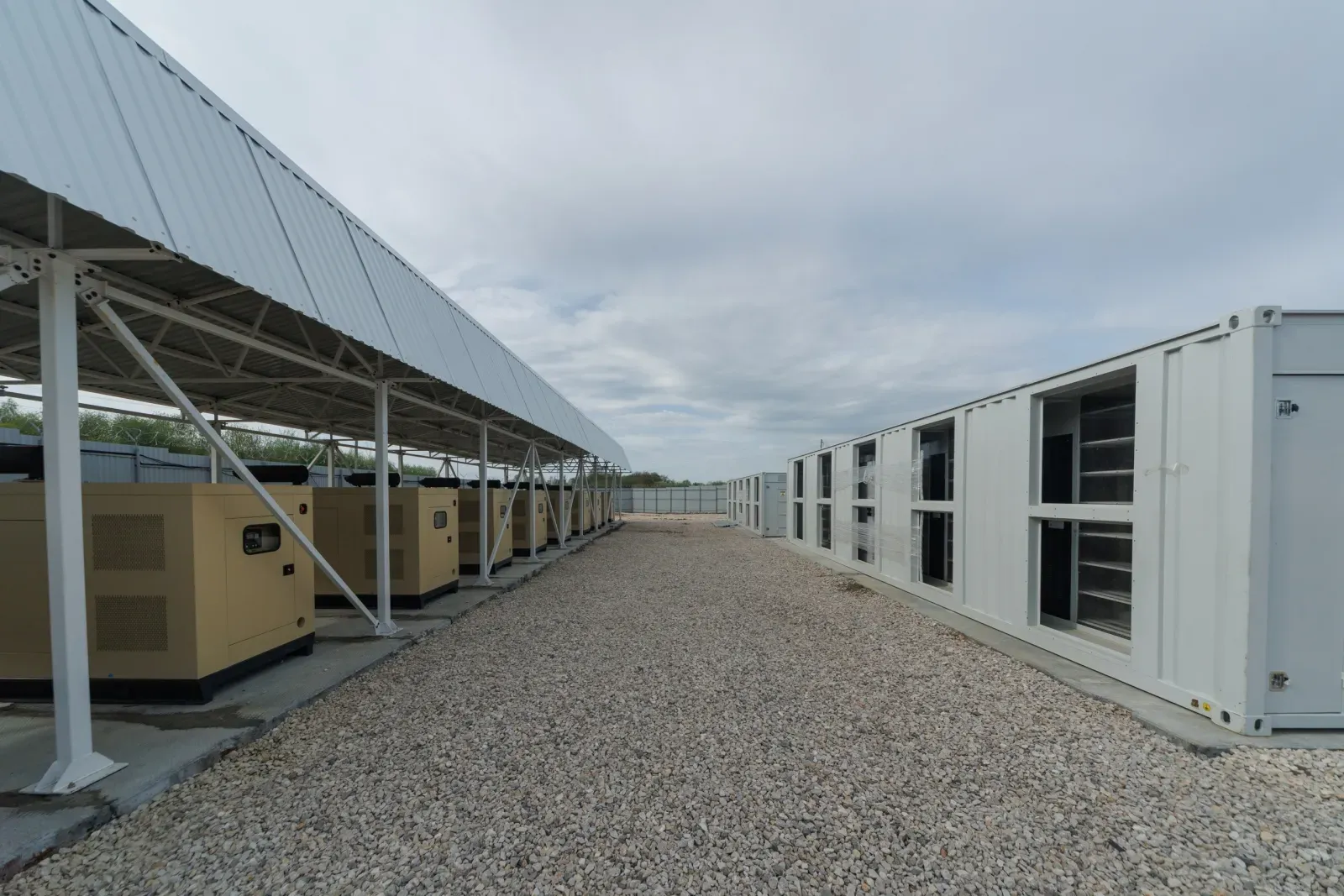
Perm Krai is one of the Russian regions where mining is permitted year-round, where industrial gas is readily available, and where the mean annual temperature sits at around +2 °C. That reads like a technical reference book, but the combination of those three factors is exactly what has turned Prikamye (the Kama River region) into a focal point for operators building farms of 1 MW and above. We will go through it methodically: what the law actually says, where the low cost base comes from, where the operating sites are physically located, and what you need to do to launch mining in Perm Krai legally and without unpleasant surprises.
This is not marketing copy. The figures come from open sources: Permenergosbyt published tariffs, FAS-regulated Gazprom gas prices, and Russian Government Decree No. 1869 of 23 December 2024 on regions with mining restrictions. Where we use estimated ranges, we say so explicitly.
Why Prikamye became a magnet for miners
The region is not the cheapest on a tariff-only basis: it loses to Irkutsk Oblast and northern Krasnoyarsk Krai on the headline number. But on the combined scorecard, Perm Krai sits in the top tier on the ratio of legality, predictability and economics.
Trunk gas — next to every industrial site
Prikamye is one of the four main gas-producing regions of Russia, in the same league as Tyumen and Yamal by production volume. Trunk gas pipelines cover the whole eastern part of the krai, and branch lines to industrial customers have been in place since Soviet times. In practical terms, this means connecting to gas for on-site power generation is physically faster and cheaper than in most other Russian regions — you do not need to run a 50 km lateral.
For mining this is critical: an on-site gas-piston power plant removes both the dependence on Rosseti grid tariffs and the exposure to scheduled grid outages. In the Ust-Kachka rural settlement, NODA runs 44 MW of Weichai gas-piston generators under a long-term direct gas supply contract — the cost of a kWh is locked in for years, with no surprises from the tariff commission.
Climate — free-cooling 8 months a year
The mean annual temperature in Perm and Permsky District is around +2 °C. Winters are reliably −15…−20 °C, and summers rarely exceed +25 °C. In practical terms, this means free cooling works for mining equipment 8–9 months out of 12. Active cooling (chillers, immersion) only kicks in during the short summer, which cuts the cooling energy budget by 30–40 % compared with southern regions and keeps the site PUE in the 1.08–1.12 range.
For comparison: in Krasnodar Krai or southern Rostov Oblast, the same configuration would deliver a PUE of 1.25–1.35. A delta of 0.15–0.20 per 1 MW of IT load, summed across a year, equates to tens of thousands of kWh that simply do not appear on the bill in Prikamye.
Regulation — Perm Krai is in the green zone of FZ-221
Since 1 November 2024, Russia has operated under Federal Law 221-FZ "On Digital Currencies", which introduced the concept of "industrial mining", established the FTS miner registry, and created the mechanism for banning mining in specific regions. Government Decree 1869 of 23 December 2024 then defined the specific list of those regions: ten federal subjects where mining is restricted either entirely or seasonally (in winter), primarily because of electricity deficits during the winter peak.
Perm Krai is not on that list. Mining here is permitted twelve months a year, with no seasonal shutdowns and no quotas. That is a strong competitive advantage over Irkutsk Oblast (full ban from 1 January 2025) and southern Siberia (seasonal restrictions).
The section "What the law says" below sets out the precise wording of Decree 1869 and what a miner operating in Perm Krai needs to do in order to sleep at night.
Logistics: highway, airport, talent
The region's production sites are clustered along a narrow corridor along the Kama River — Perm, Krasnokamsk, Chusovoy, Lysva. The M7 "Volga" trunk road is the main channel for equipment delivery from Moscow and St Petersburg, with a transit time of 18–22 hours by lorry. Direct ASIC delivery from China takes roughly seven days by lorry across the Russia–China border. Bolshoye Savino Airport handles cargo flights from Moscow for urgent shipments.
The engineering talent pool is fed by Perm Polytechnic (PNIPU) and Perm Military-Mechanical Institute, with graduates trained in power engineering and automation. Finding a qualified operations engineer for a 24/7 shift in Perm is materially easier than in Irkutsk or Norilsk, where the labour market is hollowed out by rotational shift work in extractive industries.
What the law says: FZ-221 and Decree 1869 in Prikamye
Regulatory topics are usually either bloated into 30-page tracts or compressed to the slogan "everything is legal now". Neither is useful. Here is the minimum you need to launch mining in Perm Krai without leaving legal loose ends.
FZ-221 in plain language
Federal Law 221-FZ of 8 August 2024 "On Digital Currencies" introduced three key constructs into Russian law:
- The concept of industrial mining. Mining is recognised as a legal economic activity subject to specific criteria — registry enrolment, FTS reporting, and constraints on legal form. For an individual without sole-trader status, the cap is 6,000 kWh per month of "household" mining (set by Government Decree No. 1469 of 1 November 2024); anything above that requires registration.
- The FTS miner registry. Any operator extracting cryptocurrency in commercial volumes must be on the registry. Applications go through the Federal Tax Service, with a review window of 5–10 working days on average, free of charge. A detailed walkthrough of the procedure with sample forms is in our post on the FTS miner registry (currently available in Russian).
- The regional restriction mechanism. The government received the right to impose bans and quotas in specific regions. That is the legal basis for Decree 1869.
Decree 1869: which regions are restricted
Government Decree No. 1869 of 23 December 2024 defined the list of territories with mining restrictions, formally framed "in order to stabilise energy consumption". The breakdown:
- Full ban until 15 March 2031 (i.e. six years from 1 January 2025): the Republic of Dagestan, Ingushetia, Kabardino-Balkaria, Karachay-Cherkessia, North Ossetia, Chechnya, as well as the DPR, LPR, Zaporizhzhia Oblast and Kherson Oblast — ten federal subjects.
- Seasonal ban (15 November to 15 March each year): specified municipalities of Irkutsk Oblast, the Republic of Buryatia and Zabaykalsky Krai. The full text of the decree with the district list is published on the Rossiyskaya Gazeta website.
Perm Krai appears on neither list. Mining is permitted year-round. This is not a free pass — the general FZ-221 rules (registry, taxes, reporting) still apply — but there are no region-specific restrictions on power consumption.
Tax treatment for miners in Perm Krai
There are no Perm-specific tax features for mining: the standard Russian framework applies, as amended by the tax-code package FZ-418 of 29 November 2024:
- LLC on OSNO (general taxation regime) — the only fully-featured commercial format for mining. Corporate profit tax is 25 % from 2025 (up from 20 % until end-2024). VAT does not apply to income from selling mined cryptocurrency (the Tax Code exempts it). Expenses — electricity, hosting, equipment depreciation — are deductible in full.
- Individual without sole-trader status — progressive personal income tax (NDFL) from 2025: 13 % up to ₽2.4 m of annual income, 15 % from ₽2.4 m to ₽5 m, 18 % from ₽5 m to ₽20 m, 20 % from ₽20 m to ₽50 m, 22 % above ₽50 m. Tax return (3-NDFL) due by 30 April.
- Sole traders and self-employed taxpayers are not permitted to engage in mining. The special regimes (USN — simplified taxation regime, PSN, NPD) have been explicitly closed off to mining activity in the Tax Code from 2025.
In practice this means: either you incorporate an LLC and run it on OSNO, or you remain an individual within the 6,000 kWh/month household cap. There is no third option.
Local property tax relief for mining equipment does not apply in Perm Krai — there is a separate mechanism via TOSER (priority development territory) status, but it is tied to single-industry towns (Chusovoy, Nytva, Tchaikovsky), not to the region as a whole.
NODA operates the infrastructure (LLC "Grid") and is enrolled on the industrial miner registry (LLC "Noda"). When you co-locate at our mining hotel in Perm Krai (ASIC hosting facility), we handle FTS registry filings on your behalf — clients do not have to navigate FZ-221 themselves.
Where the low tariff comes from: gas vs grid in Prikamye
This is probably the single most practical question for any miner. The gap between sitting on a grid tariff and running on on-site gas-fired generation is decisive. Let us go through the numbers.
Permenergosbyt grid tariff for 2026
For industrial consumers in Perm Krai in 2026, the regulated single-rate tariff for the second price category sits at roughly 6.5–9.5 ₽/kWh depending on voltage level, connected capacity and month (higher in winter). That is the bare tariff before grid transmission services — with grid transit charges added, the all-in figure climbs to 8–12 ₽/kWh.
For an operator modelling payback on Antminer S21 Pro or Whatsminer M60S, the difference between ₽6 and ₽9 is the difference between "pays back in 12–14 months" and "pays back in 22–26 months". The first scenario is an investment that works; the second is one that lives on the margin.
Gas-fired generation: 3.5–4 ₽/kWh on an on-site plant
The calculation has three components:
- Gas price for a large consumer in Perm Krai. Under FAS-regulated prices — around ₽8,000 per 1,000 m³ for large industrial consumers on a direct contract (2026 basis, including the October 2026 indexation of +10.6 %).
- Conversion efficiency. Modern gas-piston generators (Weichai WP13, Cummins QSV, Caterpillar G3520) convert 1 m³ of methane into 3.4–3.8 kWh of electricity at a load factor above 90 % and optimal loading.
- Unit cost per kWh on gas: ₽8,000 ÷ 1,000 m³ ÷ 3.5 kWh/m³ = ₽2.3/kWh on feedstock alone.
On top of that come operating costs (scheduled maintenance of the gas-piston plant at roughly ₽0.4–0.6/kWh), infrastructure depreciation (₽0.5–0.8/kWh) and insurance. The all-in cost on an on-site generation plant lands at ₽3.2–3.7/kWh.
Sites that lease capacity to miners then add a margin and service charges (24/7 monitoring, engineering, security, FTS registry handling). The client-facing tariff on the Russian market in 2026 starts from ₽6/kWh — the new normal after two years of indexations.
The NODA tariff at the mining hotel is from ₽5.3/kWh including VAT, made possible by our own gas-fired generation and a direct gas contract, with no grid intermediaries. For fleets of 100+ ASICs we negotiate an individual tariff with a discount.
Why the state grid loses
The Permenergosbyt tariff is rising faster than inflation: in 2024–2026 the annual indexation runs at around 9–12 %. That is not a "may happen" — it is a government-approved schedule. On a three-year horizon the Prikamye grid tariff will comfortably cross ₽10/kWh, and mining on it will stop being economic even with BTC above $120,000.
Gas for industrial consumers is also indexed, but at a slower pace — roughly 5–7 % per year — because domestic prices are written into long-term tariff schedules. The all-in cost of gas-fired generation will rise from ₽2.5 to ₽3.0/kWh by 2028; the NODA client tariff will move from ₽5.3 to at most ₽6.0/kWh. That is one and a half to two times slower than the grid.
The miners who, in 2022–2023, found "cheap grid capacity" in small Siberian towns are now lamenting the consequences — local grids have either raised the tariff or cut the connected capacity. Gas-fired generation is about predictability over a 5–7 year horizon, not about the lowest sticker price today.
Where the operating sites are in Perm Krai
The region has not turned into Irkutsk Mark II — there are no "mining hotels on every corner". But five to seven serious industrial sites are operational.
Ust-Kachka rural settlement, Permsky District
The location of the NODA site. Ust-Kachka village sits 25 km from the centre of Perm along the Perm–Krasnokamsk road, known for its sanatoriums and thermal springs. Around the village there are vacant industrial plots with trunk gas already brought to the boundary — ideal conditions for gas-fired generation.
NODA has built out a 44 MW gas-piston power plant here on a 3.2 ha plot: Weichai gas-piston generators, containerised modules for mining equipment and GPU servers, an administrative and operations building with a 24/7 engineering shift. A video tour of the site — 25 seconds, real footage.
Industrial centres — Krasnokamsk, Chusovoy, Lysva
A handful of private hosting sites operate in Krasnokamsk (15 km from Perm) and in the older industrial towns of Chusovoy and Lysva. Typically these are former metallurgical or machine-building workshops repurposed for mining. Tariffs start from ₽6/kWh, mostly on grid capacity without on-site generation.
There are also large federal operators with their own sites around Perm. Publicly announced industrial operators in the region are still few — the market is not as dense as Irkutsk Oblast was before its shutdown.
What Perm Krai does not have
Unlike Irkutsk Oblast, which hosted pool offices and a market for "industrial hosting for retail clients", Prikamye has not developed a mass mining market "for everyone". Garage and basement "farms" in residential parts of Perm and Berezniki are a risky proposition: prior to the 2024 ban they lived in a grey zone, but they now fall under FZ-221 and can attract local-authority attention via neighbour complaints about noise and load on the local grid.
If you are planning serious mining in Prikamye, pick an industrial site with a direct gas connection or a connection to the 110 kV industrial grid, legalise via the FTS registry, and do not try to cut corners.
Logistics and ASIC delivery into the region
The standard route is a lorry from Moscow along the M7 "Volga", 18–22 hours. Direct delivery from China (Whatsminer, Antminer from the manufacturer) goes by lorry across the Russia–China border, around 7 days to Perm. Bolshoye Savino Airport in Perm handles cargo flights from Moscow for urgent shipments. Logistics and customs clearance for orders placed via the NODA catalogue sit on our side — DDP Perm, with a 12-month manufacturer warranty.
NODA takes on logistics and customs clearance for equipment supplied through the catalogue — DDP Perm, 12-month manufacturer warranty.
How to deploy miners in Perm Krai: a step-by-step
If you have decided to launch mining in Prikamye, here is the sequence that works in practice.
Step 1: Choose the legal form
From 2025, in Russia mining can be conducted in only two formats:
- LLC on OSNO (general taxation regime) — the only commercial format. Profit tax 25 % (from 2025), no VAT on mining income, expenses (electricity, hosting, depreciation) fully deductible. Suitable at any scale from 5+ ASICs. Incorporating an LLC takes 5–10 working days through a notary.
- Individual without sole-trader status — only within the "household" cap of 6,000 kWh per month (roughly two ASICs at the S21 level). Tax: progressive personal income tax (NDFL) at 13–22 %, with a mandatory 3-NDFL return by 30 April.
Sole-trader status on USN (simplified taxation regime) and self-employed status do not work for mining — the special regimes (USN, PSN, NPD) have been closed off to mining activity in the Tax Code from 2025. If you read somewhere that you can "register a sole trader on 6 %", that is outdated 2024 material.
Step 2: Enrol on the FTS miner registry
Submit an application via your personal account on nalog.gov.ru, attaching: equipment serial numbers, site address, consumption capacity, and the lease or ownership contract. Review window 5–10 working days. A step-by-step walkthrough of the procedure with all forms is in our post on the registry (currently available in Russian).
If you are hosting equipment at an industrial operator, the operator enrols on the registry, not you directly (unless you are operating as a service provider yourself). Clarify with your operator under whose name the mining activity is conducted and who bears responsibility before the FTS.
Step 3: Choose the venue — own site vs hosting
Own site (CAPEX for 1–3 MW): requires ₽15–50 m of infrastructure investment, plus the cost of ASICs. Payback on infrastructure is 24–36 months. Suitable if you already hold land with utilities in place and have prior experience in engineering projects.
Hosting at an operator: you pay for power and service; the equipment remains yours. The NODA tariff of ₽5.3/kWh includes 24/7 monitoring, engineering, FTS registry handling, and basic insurance. Payback depends only on the ASIC model, the BTC price and network difficulty.
For the majority of private investors and smaller funds, hosting is the optimal choice. A precise calculation for your scenario is available in the NODA payback calculator.
Step 4: Logistics and equipment intake
If you are buying ASICs directly from Bitmain or MicroBT, allow 18 hours for a lorry from Moscow plus customs. NODA takes this on when you order through our catalogue: direct contract with the manufacturer, DDP Perm, 12-month warranty, pre-shipment inspection.
For intake, allow 1–2 working days. A standard batch of up to 50 ASICs is deployed in our facility in one working day: unpacking, serial-number inventory, test-bench verification, rack mounting, and connection to the monitoring system.
Step 5: Launch, monitoring, FTS reporting
Once you are live, you need to:
- Monitor hashrate and temperature. At the NODA site this is handled by the duty shift via the client dashboard. On your own site, you would run Hive OS or Awesome Miner.
- File quarterly reports. The FTS form covers mined cryptocurrency, exchange operations, and fiat revenue. NODA prepares the data for clients automatically.
- Pay taxes. For an LLC on OSNO, that means quarterly advance profit-tax payments and an annual return. For individuals, NDFL settled at year-end via the 3-NDFL return.
That is the entire sequence. The longest items are equipment selection and operator agreement — typically a week. The deployment and launch themselves take a single working day.
Perm Krai vs other Russian mining regions
To understand why Prikamye specifically, let us compare it with the regions where mining still operates legally in 2026. Tariff sheets for industrial mining in 2026 start at around ₽6/kWh almost everywhere — over the last two years tariffs have risen 30–40 % even in places that used to advertise "₽3".
Region · Tariff (₽/kWh) · FZ-221 status · Climate · Gas available · Logistics
Perm Krai · 5.3 (NODA gas) · Green zone · Cold, free-cooling 8 months · Yes · Medium
Irkutsk Oblast · from 6 · Seasonal ban 15.11–15.03 (some districts) · Cold · No · Difficult
Krasnoyarsk Krai · from 6 · Seasonal ban 15.11–15.03 (south) · Cold · Patchy · Medium
Tver Oblast · from 6 · Green zone · Moderate · Patchy · Good
Murmansk Oblast · from 6 · Green zone · Cold, windy · No · Difficult
North Caucasus FD · — · Full ban until 2031 · Mixed · Patchy · Difficult
Irkutsk Oblast — seasonal bans from 2025
Specified municipalities of Irkutsk Oblast (along with Buryatia and Zabaykalsky Krai) fell under the seasonal ban via Decree 1869 — 15 November to 15 March each year. In winter 2025, large operators in Bratsk and Ust-Ilimsk halted operations for the winter period and some equipment was relocated to unaffected regions. The lesson: the region with the lowest historical electricity cost is now the region with four months of idle time per year. Regulatory risk played out in exactly the scenario that looked improbable in 2023.
Krasnoyarsk Krai — seasonal bans in the south
Between 15 November and 15 March, the southern districts of Krasnoyarsk Krai (Minusinsk, Khakassia) also fall under a seasonal ban due to the winter peak. The northern districts (Norilsk, Dudinka) remain free, but logistics there is a separate, demanding problem in its own right. Tariffs start at ₽6/kWh on industrial sites, but four months of annual downtime kill the economics.
Tver Oblast — large cluster around Kalinin NPP
The region is a concentration point for federal mining operators around Kalinin NPP at Udomlya. Industrial tariffs from ₽6/kWh on grid capacity. The climate is moderate (PUE 1.15–1.20 vs 1.08–1.12 in Prikamye), and scale-up is constrained by the NPP grid capacity rather than by "your own gas".
Murmansk Oblast — early-stage market
Cold climate and available grid capacity are the region's advantages. The industrial mining market is still forming, with few large operators so far. Tariffs from ₽6/kWh; wind power is being developed slowly.
Where Perm Krai wins
Prikamye does not win on the absolute lowest tariff. But where regional tariffs start at ₽6/kWh on the grid, ₽5.3/kWh on NODA's own gas-fired generation is the best the market offers. Add a legal status year-round, a workable climate, predictable logistics and an engineering labour pool. No standout peak on any single metric, but no problem holes either. For a serious business with a 5–10 year horizon, that profile is generally more reliable than chasing the lowest possible tariff.
Frequently asked questions
Can I mine legally in Perm Krai in 2026?
Yes. Perm Krai is not on the list of regions with mining restrictions under Government Decree No. 1869 of 23 December 2024. Mining is permitted year-round. For commercial scale, you need an LLC on OSNO plus enrolment on the FTS miner registry. An individual without sole-trader status may mine within the household cap of 6,000 kWh per month without registration.
What is the minimum scale for a commercial site in Perm?
At NODA the minimum is 5 ASICs. That is the entry point for the Starter tariff (₽5.3/kWh). The Standard tariff with a discount starts at 50 ASICs. For an individual tariff, the threshold is 100+ ASICs or 1 MW. Smaller fleets are better held as an individual within the 6,000 kWh cap (roughly two ASICs at the S21 level) — this avoids registry enrolment altogether.
How much does 1 MW of on-site generation cost to deploy in Perm Krai?
Turnkey CAPEX for an on-site gas-piston plant of 1 MW runs from ₽80 m to ₽130 m, depending on distance to the gas pipeline, the required level of automation, and whether you already hold a site. This budget covers: the gas-piston generator (Weichai/Cummins/Caterpillar), foundations, gas distribution, electrical works, controls, and a boiler house for heat recovery. Time to commissioning: 90–120 working days from project sign-off.
If you would like a detailed proposal sized to your scale, submit a request via the contact form on the site and we will send across an itemised estimate.
How do I get approval for industrial gas for mining?
Through Gazprom Mezhregiongaz Perm, the regional operator: an application to connect to the gas distribution network, plus coordination with local electricity grid companies. Lead times run from 3 to 9 months depending on distance to the trunk line and the connected capacity. For large industrial consumers (from 1 MW) there is a simplified procedure.
NODA handles this within the turnkey data centre service — the client receives a working facility without having to learn the specifics of Russian energy regulation.
What is the average all-in cost per kWh on gas in Prikamye in 2026?
At regulated prices for industrial consumers (around ₽8,000 per 1,000 m³) and with modern gas-piston generators delivering 3.4–3.8 kWh/m³, the bare cost of electricity is ₽2.1–2.4/kWh. With maintenance, depreciation and insurance added, the all-in cost on the generation plant lands at ₽3.2–3.7/kWh. Client-facing tariffs from industrial operators in Russia in 2026 start at ₽6/kWh on grid capacity; on NODA's gas-fired generation, the tariff is from ₽5.3/kWh including VAT, thanks to on-site infrastructure and a direct gas contract.
What happens if you mine in the region without enrolling on the FTS registry?
Administrative fines under Article 13.32 of the Code of Administrative Offences run from ₽200,000 to ₽500,000 for legal entities, plus seizure of equipment. From 1 January 2025 the FTS uses billing data from grid companies to identify "grey" miners: a sharp rise in consumption at a non-residential address automatically lands in the inspectorate's queue. There were reportedly several cases in Prikamye during Q1 2025, mostly triggered by neighbour complaints about equipment noise.
Registry enrolment is free of charge and takes 5–10 working days. The fine is an order of magnitude larger than the cost of registration. Do the maths.
What next
If you have read this far, you already have the picture on mining in Perm Krai. The next step depends on your scenario.
1–50 ASICs, private investor or small operator. The simplest path is to co-locate equipment at our mining hotel in Perm Krai. Tariff ₽5.3/kWh including VAT, FTS registry filings on our side, deployment in one working day. Minimum 5 ASICs, no upper cap.
100+ ASICs, fund or corporate client. Individual Standard or Volume tariffs with a discount from 5 %. Get in touch via the contact form — a manager will come back within one business day with a quote and terms.
1+ MW, on-site gas generation. This is the turnkey format: design, equipment supply, installation, commissioning and operations. Lead time 90–120 working days. Details on the turnkey data centre page.
Want to run the numbers first. The payback calculator factors in the current BTC price, network difficulty, and the NODA tariff. A 36-month cashflow including the 2028 halving and a difficulty growth model is generated after a short form.
Want to see the site visually. The Perm Krai site page includes a 25-second video tour, a photo gallery, coordinates, and a description of the engineering systems.
If you still have questions on regulation, tariffs, or specific ASIC models suited to Prikamye conditions, write to a manager on Telegram at @nodasalesbot or email contact@nodagroup.ru. We reply within a business hour.